



























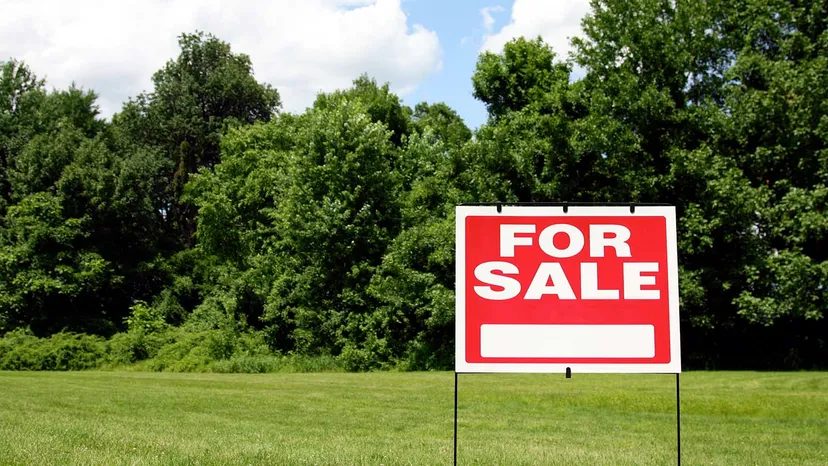
Tom Hanks spent a fortune and his sanity trying to fix the mansion in The Money Pit. The stairs collapsed. The roof caved in. It was a cautionary tale about buying a fixer-upper without looking closely at the foundation. But there is another kind of real estate nightmare that doesn’t have a punchline. It’s buying a vacant lot with the same careless enthusiasm.
You might think buying land is simpler than buying a home. After all, there are no leaking pipes or rotting floors to worry about yet. You just pour concrete and build. But the stakes are just as high, if not higher. The reasons to buy land vary wildly. You might want to build a custom dream home. You might see it as a long-term investment waiting for zoning changes. You might even plan to start a business on the plot.
Regardless of your goal, land comes with a unique set of legal and physical hurdles. A house has walls that hide problems. A lot exposes them. You could buy a parcel only to discover it’s unusable. Restrictions might prevent construction entirely. Or worse, the cost to make it buildable could swallow your budget whole.
Before you sign any papers, you need to understand the true cost to build a house on raw land. It’s not just the price of the dirt. It’s the permits, the surveys, the infrastructure, and the surprises. Here are the first critical steps to ensure you aren’t walking into a financial sinkhole.
Зміст
10: Location
Location is the first filter. It’s not just about the view or the neighborhood vibe. It’s about viability. A beautiful lot in the middle of nowhere might be impossible to build on. Or it might cost a fortune to connect to basic utilities.
Why location matters for buildability
When you look at a parcel of vacant land, you aren’t just looking at trees and soil. You’re looking at access. Can you get a crew and heavy machinery to the site? Is there a road frontage? If the land is landlocked, you might need to negotiate an easement with a neighbor just to reach your own property. That can lead to legal disputes before you even buy a single shovel.
Utility access and hidden costs
One of the biggest questions buyers ask is how much it costs to build a house on a remote lot. The answer often depends on how far the nearest water, sewer, gas, and electric lines are from your plot.
- Septic Systems: If the property isn’t on municipal sewer, you’ll need a septic system. This requires a perc test (percolation test) to see if the soil drains properly. Bad soil means bad septic, which means you might need an expensive alternative system or, in worst cases, the land is unbuildable.
- Electric and Gas: Running power lines from the street can cost thousands. The same goes for natural gas lines. If they aren’t nearby, you’ll likely have to go electric-only or use propane, which adds ongoing costs.
- Water: Well drilling is another variable. If the water table is low or the quality is poor, drilling can fail or require expensive filtration systems.
Zoning and restrictions
Location also means checking the local zoning laws. Just because you own the
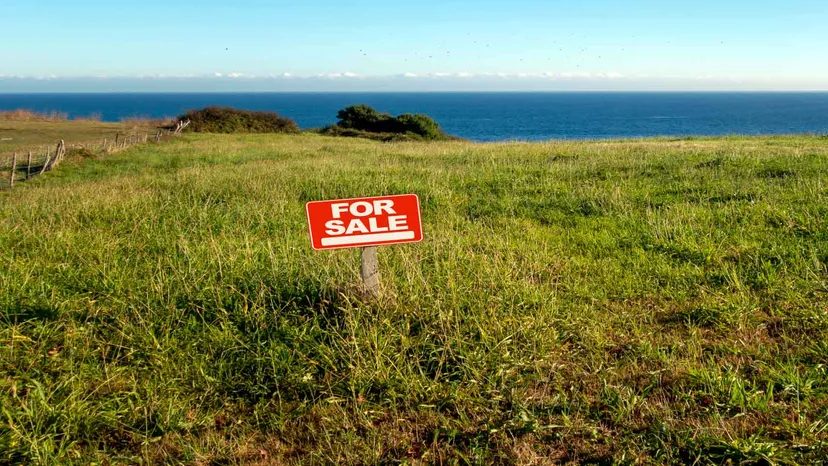
Factor in Hidden Costs Early
Buying land isn’t just about the sticker price. You’re investing time, yes, but you’re also risking money. The more prep you do now, the less likely you are to bleed cash later. What exactly drains your wallet before the first shovel hits dirt?
Title insurance. It sounds like paperwork. It’s not. It’s armor.
Title insurance protects you and your lender from property loss or damage caused by liens, encumbrances, or title defects. Think of it as a shield against legal headaches that could strip you of ownership. Banks might not force you to buy it for a cash deal, but if you’re getting a mortgage? Expect them to require it. They want their investment safe. You should want yours too.
Then there’s the survey. Do you need one? Maybe. Maybe not. The land might have been surveyed recently. A little legwork—digging through county records—might reveal a recent plat map. But if the boundaries are ambiguous or the lot is wild, you’ll need a professional surveyor. They chart the lines. They define where your fence goes. Costs vary wildly based on location, terrain, and size. Don’t guess. Get a quote.
Utilities are where the real budget killers hide.
Running electricity and water to a vacant lot costs money. A lot of it. You’ll pay for the taps, the lines, the connections. Then you pay monthly fees. If you’re in a rural spot, you might need to drill a well. That’s $5,000 to $15,000 depending on depth. Septic systems? Another big chunk. If you’re buying land purely as an investment to flip, you dodge these costs. If you’re building a home, they’re non-negotiable.
Know the numbers. Know the limits. Then check the rules.
Decode Zoning Restrictions Before You Buy
Zoning laws dictate what you can and can’t do with your land. It’s why you don’t wake up to a Walmart in your backyard or a sewage plant next to the elementary school. Zoning is local law. It regulates land use. It’s complex. It’s critical.
Before you buy, verify you can actually build what you want. A vacant lot isn’t just dirt. It’s a regulated parcel.
Start simple. Is it residential? Commercial? Agricultural? Most counties have a zoning office. Many have online portals. Search for the parcel ID. Look up the zoning designation. If it says “R-1,” you probably can build a single-family home. If it says “Agricultural,” you might be limited to farm structures.
But don’t stop at the current code. Look at the long-term land use plans. Check for scheduled road additions. These documents predict the future. A quiet rural road today could be a four-lane highway tomorrow. Zoning might protect your house now, but infrastructure changes can destroy your peace—and your property value.
Zoning is the first line of defense against unwanted development next door.
Even after you pass the zoning hurdle, other restrictions apply. Homeowners associations. City ordinances. Environmental protections. These limit what you can build, where, and how.
You’re not just buying land. You’re buying into a set of rules. Read them. Understand them. Respect them.
If you skip this step, you might find yourself staring at a plot you can’t build on. Or worse, a plot you can build on, but only after fighting a decade-long legal battle. Don’t let that be your story.
Check the zoning. Check the plans. Then check your budget.
Navigating HOA Fees and Covenants
If the plot you are eyeing sits inside an established neighborhood, there is likely a homeowner’s association (HOA) running the show. These groups aren’t just for show. They collect dues. They enforce rules. You might find yourself dictated on how often you mow the lawn or which side of the driveway your car must park. Some associations even have clauses about pet types or colors.
Then there are the covenants. Or deed restrictions. These are private contracts between the original landowner and you, the buyer. They differ from zoning laws, which are public government mandates. Zoning dictates if you can run a business from your home. Covenants might dictate if you can paint your front door red.
City ordinances add another layer. Inside city limits, you still have to follow local laws. Garbage removal schedules. Recycling protocols. Noise restrictions. It feels like a maze. It can be.
But these restrictions aren’t always the enemy. They create uniformity. If you find a neighborhood with covenants you can tolerate, you gain certainty. You know your neighbor won’t build a ten-foot shed blocking your view. You know they won’t park a rusted truck in their yard. The rules protect your property value by enforcing standards. You pay for peace of mind. Or for the privilege of living in a curated environment.
Checking for Utilities
Before you pour concrete or frame walls, you need power. You need water. You need a place for waste to go. This is where the “invisible” infrastructure matters most.
Many vacant lots in developing subdivisions already have utilities stubbed to the street. That’s a win. It saves thousands. But if you are buying raw land in a rural area, you might be starting from zero. Or close to it.
Electricity
Contact the local utility provider. Ask about the nearest power pole. Is it accessible? What is the cost to run a line to your specific lot? If the pole is a quarter-mile away, that trenching and meter installation will eat your budget. Some rural providers offer “service extensions.” These can cost tens of thousands of dollars. Get a quote in writing.
Water
Is there a public water main nearby? If yes, ask about connection fees. These are often separate from your monthly bill. They are one-time costs to tap into the grid. If there is no public water, you will need a well.
Digging a well is expensive. You need a hydrogeologist to assess water depth and quality. You need permits. You need a drill rig. In some counties, you must prove there is enough water to support your household before the health department issues a permit. If the well fails, you have drilled a hole in the ground with no water. That money is gone.
Sewer
Public sewer is the easiest option if it exists. You just connect and pay. If not, you need a septic system.
Septic systems require soil testing. A percolation test, or “perc test,” determines if the ground can absorb wastewater. If the soil is too clay-heavy or too sandy, you might not be able to install a standard system. You might need a more expensive alternative, like a mound system or a aerobic treatment unit. These require more maintenance and higher costs.
Don’t assume utilities are
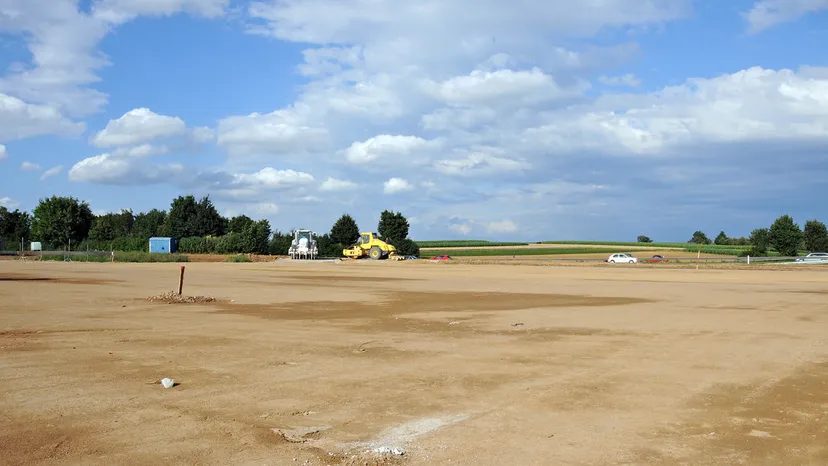
Skip utilities if you’re just holding land for value. But if you plan to build? They are non-negotiable. You need power, gas, internet, and phone lines. Ideally, you find a lot where these are already in the ground. It saves headaches. It saves cash.
If you are unlucky, you pay. You call the power company. You call the gas provider. Gas gets tricky. Do you go with a local line? Or install a tank on-site? That choice changes your budget. Water and sewage are worse. If the lot is far from city mains, you drill a well. You install a septic system. Both require permits. Both cost extra. Both add to the hassle.
Assuming you can actually get to the property, there is the road issue.
Road Access on Rural Land
It sounds simple. A road. Just drive up to it. But rural land? Not so much. In the city, access is a given. In the country, you might be cut off. The only way in might be a private drive. That creates a chain reaction of problems. No public road often means no public water. No public sewage. You’re back to wells and septic tanks. More cost. More permits.
The bigger issue is access itself. A public road is safe. It’s guaranteed. A private road? Not so much. If your land is landlocked—surrounded by other people’s property—you need a legal right to cross their land. This brings us to the next headache.
Understanding Easements
Welcome to real estate law. An easement is a right to use another’s land for a specific purpose. Think of it as a legal loophole. You find the perfect lot. Dense woods. A creek. A view that takes your breath away. But there’s no street. No public access. The only way in is through your neighbor’s yard.
You need an easement.
If you’re lucky, you’ll talk your neighbor into it. Friendly conversation. A handshake. Maybe you need a power line across a corner. Maybe you need a driveway to their private road. The terms depend on the situation.
But don’t trust a handshake. Hire a real estate lawyer. Even if you like your neighbor. Official documentation protects you. It sets the rules. It limits liability. If your neighbor refuses to cooperate, it gets ugly. You might sue for a “way of necessity.” You have to prove in court that you need the easement to access your property. Or you can sue for an easement based on prior use. Did the previous owners cross that land? If so, you might have a case.
Still, if litigation is on the table, get a lawyer. Do not DIY this part.
The Necessity of Surveying
Before you sign anything. Before you pour a single drop of concrete. You need to know where the lines actually are. Not the lines in the sky. The lines on the ground.
A professional survey is the only way to know your true boundaries. Deeds are descriptions. They are words. Words can be vague. Words can be wrong. A surveyor puts stakes in the ground. They measure. They verify.
Why does this matter? Because encroachment is expensive. You build a fence. It’s two feet too far. Now you’re arguing with the neighbor. Now you’re arguing with the county. Now you have to move the fence. Or sue. Or pay.
A survey also reveals those easements we just talked about. Maybe the neighbor has a right to use a path through your backyard. Maybe they have access to the well. You don’t want to discover that after you’ve built a deck over their driveway.
Check for restrictions too. Setbacks. Height limits. Environmental protections. A wetland might look like dry grass from the road. It won’t look like that once you bring in heavy machinery. You’ll hit a regulator. You’ll hit a stop work order.
Get the survey. Read it. Understand it. It’s the baseline. Everything else rests on it.
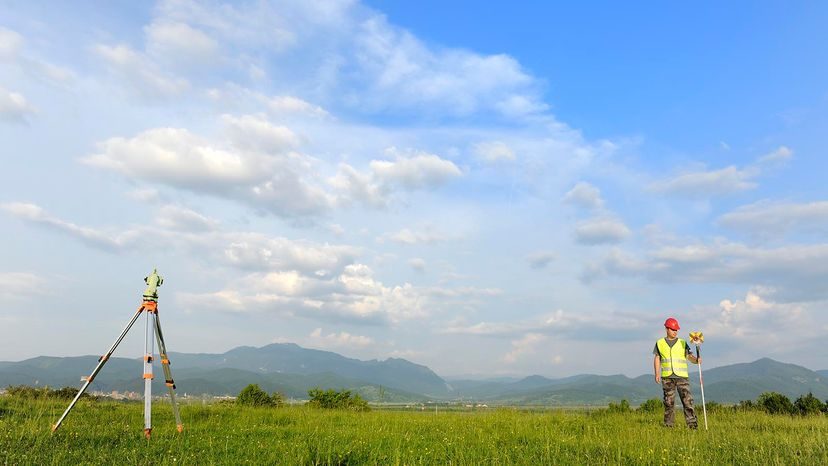
Maps lie. Or at least, they simplify reality until it becomes dangerous to ignore the gap between ink on paper and the dirt under your boots. When you buy a lot, the plat you get from the county shows lines. Those lines are abstract. They don’t tell you where the actual corner posts are buried. That’s why you hire a pro.
A licensed surveyor doesn’t just guess. They research. They pull old records, cross-reference deeds, and then go out into the brush with a theodolite and stakes. Their job is to translate that paper plat into physical markers you can actually see. Sometimes, you’re lucky. The previous owner might have left corner pins in place, or maybe the county has a recent survey on file. Check the paperwork first. Walk the perimeter. If you see rusted caps or iron rods sticking out of the ground, you might save a few hundred bucks.
But don’t get comfortable.
Even if markers exist, they could be twenty years old. Ten years old. Yesterday. Settlement shifts. Erosion hides them. Neighbors move fences. A survey from the Clinton administration is basically a suggestion at this point. You need a current boundary confirmation. Why? Because legal headaches love ambiguity. Easements? Driveways? That neighbor’s dog? You need to know exactly where your legal responsibility ends and theirs begins before you pour concrete.
Beyond the Line: Elevation and Risk
A boundary survey keeps you from building on your neighbor’s lawn. But it doesn’t tell you if your house will float away when the rain comes.
That’s where different types of surveys kick in. A construction survey is precise. It maps out elevations. It tells you where the high and low points are so you can design your foundation correctly. You can’t build on a slope without knowing if that slope is stable or just a landslide waiting to happen.
Then there’s the floodplain survey. This is the heavy hitter.
Most people think flooding only happens in coastal towns or near big rivers. It doesn’t. Flash floods happen in valleys. Groundwater rises in low spots. A floodplain survey uses topographical data to determine your lot’s elevation relative to the Base Flood Elevation (BFE). It’s not just about rain. It’s about where the water wants to go.
If you skip this, you’re gambling. And the house of cards is your investment.
The Cost of Certainty
So, what’s the damage to your wallet?
It depends. A simple boundary check for a small, flat lot in a developed suburb might run a few hundred dollars. A complex survey on a fifty-acre parcel in the woods with dense timber and unclear historic markers? That’s going to cost significantly more. Time is money here. The surveyor has to fight through underbrush, dig for missing pins, and spend hours in the county clerk’s office digging up historical plats.
Expect to pay anywhere from $300 to $2,000+ for standard services. A floodplain or construction survey can push that higher. Is it worth it?
Ask yourself this: Would you rather pay $1,500 now or $100,000 later to relocate a foundation that’s sinking into a swamp you didn’t know existed?
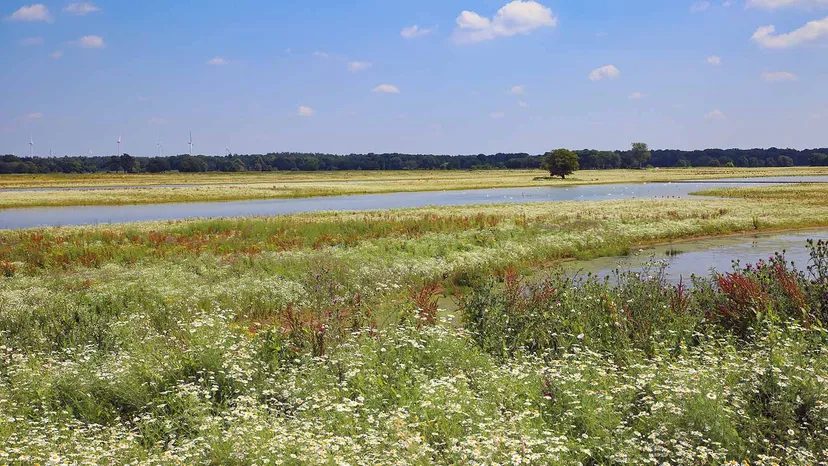
Flooding is not a feature. It is a demolition crew made of water. You do not want your future home sitting in a basin that turns into a lake every time it rains hard. The damage is structural, expensive, and usually covered by very little insurance. So, before you sign anything, you need to know if the dirt beneath your boots is actually safe ground.
Reading the Floodplain Maps
Start with the records. Plats—the old maps of the land—often hold the answers you need. Look for elevation data. If the previous owners or the county have already mapped out where the water used to go, you are halfway there. It saves you money and time.
If the plats are vague, or if you just don’t trust what you’re seeing, hire a land surveyor. They know how to read the subtle dips and rises in the terrain that a casual glance misses.
Then, cross-reference everything with FEMA flood zones. These are not suggestions. They are legal designations that dictate your risk and your costs.
- Zone A : High risk. There is a 1 percent chance of annual flooding (a 100-year floodplain). If you build here, you must buy flood insurance. Premiums can be steep.
- Zone X or C : Low risk. These areas have less than a .2 percent chance of annual flooding. This is the sweet spot. You avoid the mandatory insurance trap and sleep better at night.
The Paperwork Gauntlet
Once you confirm the land won’t wash away, you hit the final boss of buying raw land: the bureaucracy. You cannot simply build. You have to ask permission. First on the docket?
Building Permits
You need permits. Not later. Now.
The specific rules vary by county and state, but the logic is universal. The local building department needs to ensure your structure won’t collapse on a neighbor or clog the sewer system. Start by visiting the local clerk’s office or their website. Look for “vacant land development” or “site plan approval.”
You will likely need to submit:
– A site plan showing where the house, driveway, and septic (if no sewer) will go.
– Proof of lot size and setbacks (how far the house must be from property lines).
– Erosion control plans to keep mud out of the storm drains.
Some counties require a preliminary plat approval before you even apply for a building permit. This confirms your lot is legally buildable. Don’t skip this step. Building without a permit is a fast track to fines, forced demolition, and a sale that falls apart at closing.
Get the paperwork right. Then get the permits. Then you can start digging.
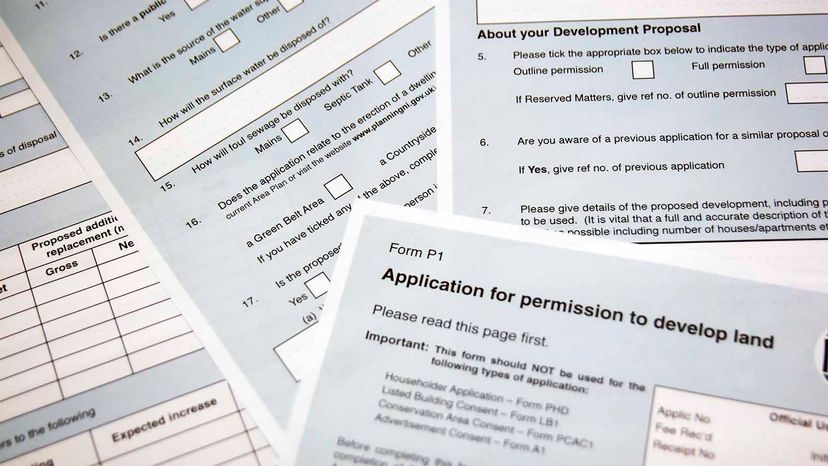
Most people assume buying land is a clean slate. It isn’t. Before you even think about swinging a hammer, you are staring down a mountain of government red tape. Zoning laws, building permits, burning permits—the list is exhaustive. It feels like a hassle. It is. But those permits serve a purpose. They keep your neighbor from turning your quiet retreat into a fireworks factory. They ensure the structure you build won’t collapse into a pile of splintered wood because someone cut corners on the foundation.
You need to be ready for this. Really ready.
The Permit Gauntlet
The construction phase is not just about pouring concrete. It is about paperwork. Every step triggers a new requirement. Want to drill a well? That requires a permit. Installing a septic system? Another permit. Plumbing and electrical work? You guessed it. More permits.
It is tedious. It is slow. But here is the reality: that stack of approved documents is what turns a risky gamble into a legal asset. When you are done, you have a home that stands up to code inspections. You have proof that the work was done right. Without that paper trail, you are just living in a house that might not be yours in the eyes of the law.
Due Diligence: Don’t Skip the Homework
Buying a vacant lot is different from buying a house. You cannot see the plumbing behind the walls or check the roof for leaks. You are buying potential. That is why due diligence is not optional. It is the only thing standing between you and a swamp.
Engage a reputable real estate agent. They know the local landscape. But do not rely on them alone. You need to verify the title. Is it clear? Are there liens? Can you legally build what you want to build? Is the land actually hooked up to municipal utilities, or are you looking at a million-dollar well and septic system? A real estate lawyer can help navigate this long list of checks. Do not skip it.
Is Vacant Land a Good Investment?
It can be. But only if you do the work. Location is king. Soil quality matters—bad soil means expensive foundations. Drainage is critical; you do not want your future basement as a swimming pool. Road access determines whether you can get your construction crew and materials to the site. Zoning restrictions dictate what you are allowed to build. Ignore these factors, and you are buying a liability, not an asset.
Land First vs. House-and-Land Packages
Some people buy the land first, then build later. This gives you freedom. You can wait for the perfect contractor. You can save up. But it rarely saves money. In fact, you are paying for the land to sit there, doing nothing, while interest accrues.
Alternatively, consider a house-and-land package. A developer buys a large tract, subdivides it, and offers you a pre-designed home on a specific lot. It is often cheaper. It is faster. But you lose customization. You are locked into their plans. And you are locked into their rules.
The Covenants You Can’t Escape
Even if you buy the land and build the house, you are not free. Restrictive covenants bind you. These are rules set by the developer or the neighborhood association. They might ban fences. They might prohibit pools or hot tubs. They might even ban campfires.
This is the trade-off. You get a structured community, but you lose total autonomy. Before you sign, read the covenants. Understand what you are agreeing to. Do not assume you can do whatever you want on your own property. You cannot.
Building vs. Buying: The Cost Reality
For years, buying an existing home was the cheaper option. That changed. According to the National Association of Home Builders 2019 Construction Cost survey, the median sales price of an existing single-family home hit $485,128. That is the highest in the survey’s history.
Meanwhile, the average construction cost for a new single-family home was $296,652. On paper, building is significantly cheaper. Hundreds of thousands of dollars cheaper.
But look closer. These numbers are national averages. They do not account for local variations. Land prices in coastal cities can be astronomical. Labor costs vary by region. Material prices fluctuate with the market. In some areas, buying an existing home is still the more economical choice. In others, building is a no-brainer. You have to crunch the local numbers. Do not rely on national stats to make your decision.
The paperwork is endless. The costs are unpredictable. But if you navigate the permits, respect the covenants, and do your due diligence, you end up with something tangible. A piece of the world that is yours. And legally sound.