


























Sanding is the longest part of any DIY project. It’s also where your budget disappears fastest. You buy a few sheets, they tear up, and suddenly you are spending more on consumables than on the actual project.
There is a simpler way.
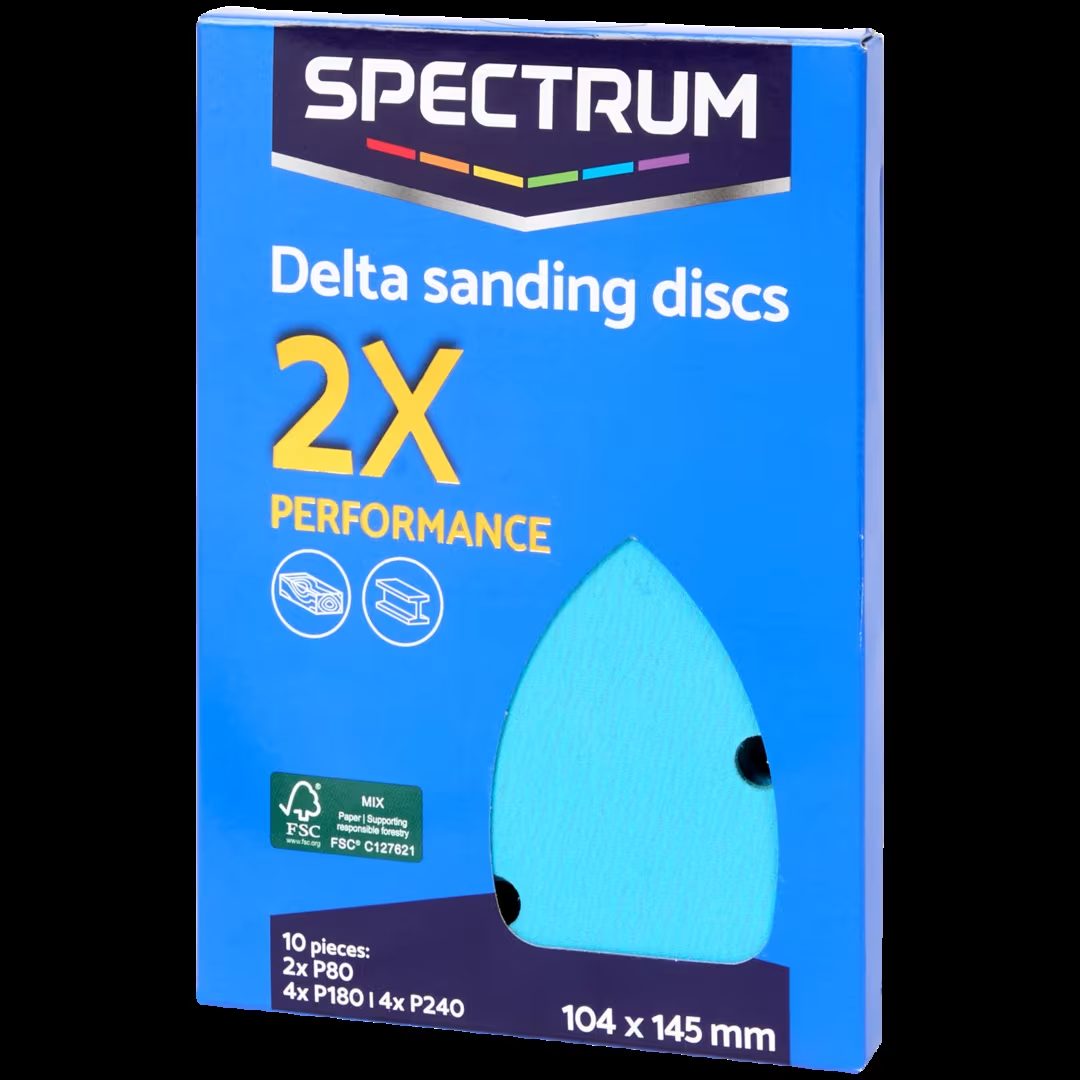
Action is currently selling Spectrum sanding discs for 1.49 euros for a pack of ten. They work on wood. They work on metal. They come with a hook-and-loop backing. And at that price, you can afford to throw them away the moment they stop cutting.
The goal here is not to buy the best sandpaper in the world. The goal is to work cleanly without forcing a clogged disc. A fresh disc cuts faster. It creates less heat. It leaves fewer scratches.
Зміст
The Math Behind the Deal
Let’s break down what you actually get for 1.49 euros.
The pack contains ten discs with an adhesive strip and perforations. The perforations help with dust extraction, which keeps the surface cleaner longer. The grains are specific:
- 2 discs of P80
- 4 discs of P180
- 4 discs of P240
That is roughly 0.15 euros per disc.
Is there a trap? Not really. But you need to be realistic. These are not industrial-grade discs for stripping a entire deck or refinishing a whole floor. They are designed for maintenance. They are for the small jobs.
When to Use These Discs
This deal shines during spring cleaning. It is perfect for refreshing furniture. It works for cleaning metal brackets. It is ideal for prepping skirting boards, small metal parts, doors, or shutters before painting.
If you do heavy construction work daily, you might prefer heavier-duty discs. But for the weekend warrior, these are sufficient. They allow you to change grits without hesitation.
The Three-Stage Method for a Clean Finish
You have three grits. Use them in order. Do not skip steps.
1. Start with P80 (The Heavy Lifter)
Use the two P80 discs to remove old paint, deep scratches, or rough surfaces on wood and steel. This grit cuts aggressively. Change the disc as soon as it slows down. Do not wait until it is completely smooth.
2. Move to P180 (The Refiner)
Switch to the P180 discs. These remove the scratches left by the P80. They smooth out the surface. You will see the grain becoming more uniform. This step prepares the surface for paint or stain.
3. Finish with P240 (The Polisher)
Use the final four P180 discs to lightly sand the surface one last time. This removes any remaining imperfections. The result is a surface ready for a topcoat. It feels smooth to the touch.
Why the Price Matters
At 1.49 euros, you can afford to waste a few discs. You can test different techniques. You can practice on scrap wood. You do not need to save every disc.
This approach saves time in the long run. A clogged disc burns the wood. It leaves marks that are

Why mixing grit levels saves your finish
Trying to sand an entire project with a single abrasive grit is a classic amateur mistake. You either gouge the surface or make zero progress. The secret lies in the progression.
Start with P80. This is your heavy lifter. It strips old traces, evens out minor chips, and tackles uneven surfaces. It’s the grain that actually removes material quickly.
Move to P180 next. This is the compromise. It smooths the scratches left by the coarse grit and creates a uniform base for primer or varnish. You’re no longer fighting deep marks.
Finish with P240. This is where the professional edge comes in. It softens the texture under your fingertips and prepares for a clean topcoat. On wood or metal, skipping this step is often why a DIY job looks “okay” rather than “factory fresh.”
Wood versus steel: knowing the limits
The goal changes depending on the material.
On wood, you want to prevent tear-out. By moving strictly from P80 to P180 to P240, you limit deep scratches and ensure the substrate is clean before any stain or paint goes on.
On steel or metal, the aim is different. You’re removing light oxidation and breaking up rough spots to uniform the area before a touch-up. You want to improve the look without carving into the base metal.
But these discs have hard limits. If you face thick rust, stubborn old paint over large areas, or heavy stripping, these standard discs will fail. You need something more robust. These are for routine maintenance, not major restoration projects.
The comfort factor: Velcro and perforations
The velcro backing is a non-negotiable time saver. It lets you swap discs instantly without frustration. It encourages you to change grits at the right moment rather than wearing out a fine P240 by forcing it to do coarse work.
Perforations matter too. If your sander has a dust extraction port, these holes channel debris away. Less clogging means consistent cutting power and a cleaner work area.
Check compatibility before buying. Ensure your sander accepts hook-and-loop discs and that the hole pattern matches your vacuum setup. A quick visual check takes seconds.
How to stop wasting money on abrasive dust
The mistake isn’t the price. It’s the technique.
Pressing too hard doesn’t speed up the work. It loads the paper with dust faster and risks marking the surface. Use light pressure. Keep your movements regular.
If a disc starts to clog, don’t toss it immediately. A quick tap or brush can often revive a P240, keeping it sharp for that final pass. The goal is to maintain an abrasive that actually cuts.
Keep your grits separate. Never reuse a P80 disc that has touched a dirty surface on a finished area. You’ll just embed new scratches into the smooth finish you just spent hours creating.
The final verdict on the Spectrum set
At 1.49 € for a pack of 10, the Spectrum discs are hard to beat for everyday tasks. They offer a clean result without blowing your budget on consumables. Availability varies by store and stock, so check locally.
The key takeaway isn’t just the cost—it’s the method. Starting with too fine a grit wastes time. Skipping steps ruins the finish. The P80-P180-P240 progression is the simplest path to a professional look.
Here is the breakdown:
– Price: 1.49 €
– Quantity: 10 discs (approx. 0.15 € each)
– Grits: 2x P80, 4x P180, 4x P240
– Material: Suitable for wood and metal (including steel)
– Features: Hook-and-loop attachment, perforated, FSC® certified
The real value lies in having the right tool for each stage. It’s not about saving pennies on paper. It’s about changing the disc at the right moment to work cleaner. You end up with a better result, and arguably, less frustration.
Which grit do you usually skip? Many people jump straight to the fine stuff, thinking it’s faster. It rarely is.