





























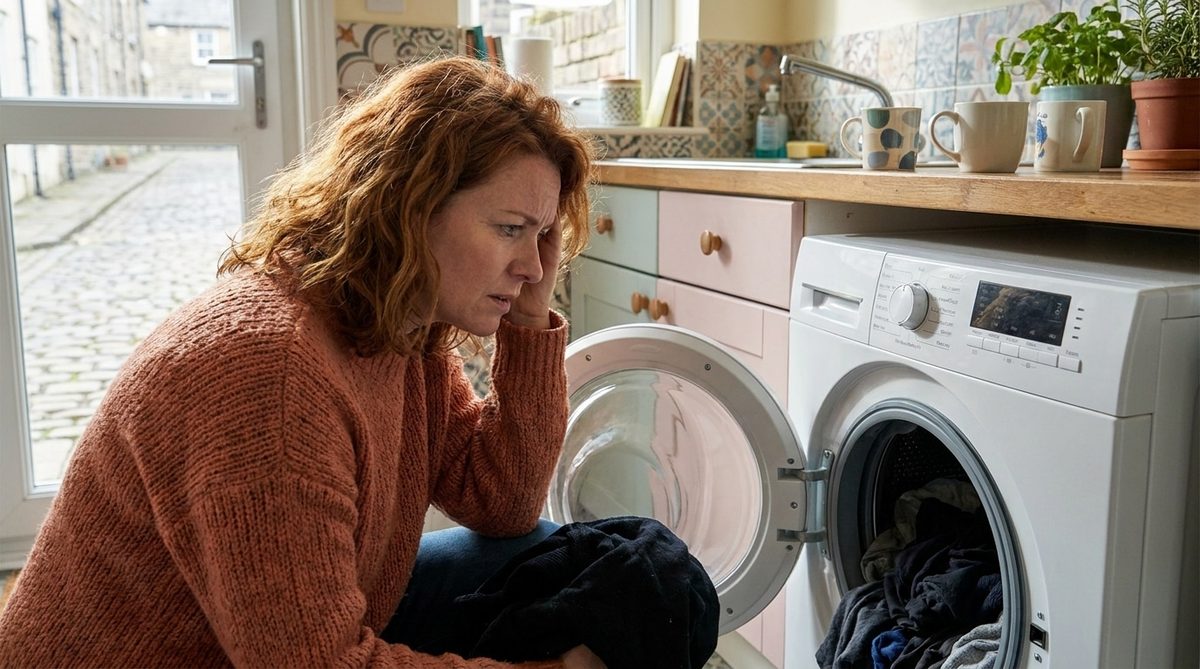
The cycle ends. The door closes. Life happens.
There’s a dinner to start. A child to put to bed. You walk away.
When you return, hours later, the machine is silent, but the laundry inside is trapped. It’s damp, warm, and stagnant. Now you face a choice: do you hit restart to be safe, or do you hope air circulation will save you?
The difference isn’t about luck. It’s about time. And moisture.
In a closed drum, humidity creates the perfect breeding ground for mildew. Some fabrics make this worse. Here is how to decide when to relaunch the cycle, and how to salvage forgotten clothes without ruining them.
Зміст
What Actually Happens Inside the Drum
Right after the spin stops, your clothes are hot and wet. That combination creates that stale, “closed-up” smell if the air can’t move.
For the first two hours, nothing is permanently damaged. The moisture is present, but the bad smells haven’t had time to anchor into the fibers yet. But the clock starts ticking immediately.
A closed machine keeps the atmosphere saturated. Residuals from detergent, sweat, skin oils, and dirt act as fuel for odor-causing bacteria. The tighter the load is packed, and the gentler the spin cycle, the slower the drying process. The longer the water sits, the faster the situation degrades.
The Timeline: When to Act
Under 2 Hours
You’re in the clear. If you pull the clothes out now and shake them loose, they will dry normally. No special treatment needed unless the load was huge.
Around 6 Hours
This is the tipping point. At this stage, the smell might still be faint, but it is settling in, especially on cotton. If you wait until tomorrow, you risk having to fight a mildew odor that is much harder to remove.
The safest move at the six-hour mark is to run a full wash cycle. Don’t try to hack it by just rinsing. The odor has begun to embed itself in the fabric structure.
8 to 12 Hours
Here, the window for easy fixes closes. Odors become tenacious. The effect accelerates if the room is hot and humid, which is common in late spring and early summer. In these conditions, your washing machine becomes a pressure cooker for smells.
Why Some Fabrics Are Worse Offenders
The type of laundry matters. Thick items and “odor-trap” textiles accumulate moisture and residues faster. Think towels, jeans, sweatshirts, bedding, and gym clothes.
Microfibers and technical fabrics hold onto sweat odors particularly well. Forgetting a load of gym gear can reactivate those smells later, even if the rest of the load seems fine. One dirty towel can contaminate the entire load as it dries.
Relaunching early isn’t about being tidy. It’s about saving time. It is better to wash the clothes properly now than to dry them, fold them, and have them smell bad the first time you wear them.
Room Conditions Play a Role
Don’t ignore the environment. If your washer is in a warm, humid bathroom or kitchen, odors set in faster.
Warm air holds more moisture. It keeps the clothes damp longer. The hotter it is, the quicker you need to act. The line between “it’s fine” and “it’s ruined” moves faster in a steamy room. Waiting until the next day in a humid house is often choosing a battle you’ll lose.
How to Save Forgotten Laundry
If the clothes have been sitting for less than six hours, the goal is simple: break the moisture seal.
Take the laundry out. Shake it out. Let it air for ten minutes. Check for smells.
- No smell? A quick rinse cycle followed by a spin is enough. This works best for lightly worn items.
- Slight odor? Run a short wash cycle.
When you restart, separate the pieces. Don’t put wet clothes back in a ball, even for a minute. You need water to circulate freely.
The 6-Hour Rule: Full Wash
If it’s been around six hours, run a complete cycle.
Set the temperature based on the care labels and the level of odor. There is no need to crank everything to 60°C if the fabric can’t handle it. But washing in cold water might leave that stale undertone.
Stick to your usual temperature. If your machine has a “long” or “intensive” setting, use it. You want good agitation and thorough rinsing. Do not overload the detergent. Excess residue traps odors just as well as dirt does.
The 8-12 Hour Fix: Anti-Odor Strategy
After eight hours, you need a plan.
- Run a full wash cycle.
- Use the “hygiene” or “high temperature” setting if available.
- Dry immediately. Air drying or tumble drying must happen right away. Leaving damp clothes after a rescue wash defeats the purpose.
To help neutralize odors without damaging fabrics, add one of these during the rinse:
- 200 ml of white vinegar in the fabric softener drawer (never mix with bleach).
- 2 tablespoons of baking soda directly into the drum.
If towels still smell after drying, wash them again. Don’t put them away hoping the smell will fade. It won’t.
The smell is stubborn. Your clothes are just the canvas. Treat them like it.
Let’s be clear. The delay function on your washing machine is a trap if you aren’t ready to move the load the second it finishes. It doesn’t solve the smell problem; it just shifts the deadline. You need to program the end time to match your actual availability. Or better yet, set a phone alert. The goal is to minimize the window where wet clothes sit still. Wet, stagnant fabric is where the bad odors breed.
Once the cycle ends, get the door open. Pull the clothes out. If you can’t hang them immediately, at least get them out of the drum. A quick unload prevents the mildew from setting in. It’s about reducing the time the fabric stays damp and immobile.
Keep the machine breathing
Your washer needs to air out between cycles. Leave the door slightly ajar when you’re done. This cuts down on that stuffy, closed-in smell. Wipe down the rubber door seal with a cloth. Moisture loves to hide in those folds, and that’s where the mold starts.
Don’t forget the detergent drawer. Rinse it out occasionally. Residue builds up, ferments, and then perfumes your next load with a musty scent. If your machine already smells like a damp basement, it’s going to transfer that smell to your clean clothes. Prevention here is low-effort but high-reward. Air, light, and drying the wet spots. These small habits stop the need for aggressive deodorizing cycles later.
The dosage mistake everyone makes
Check how much detergent you’re using. Too much, especially liquid, leaves a film. That film traps dirt and holds onto odors. Repeatedly washing on cold cycles also contributes to invisible buildup inside the drum.
The fix is simple. Dose accurately based on your water hardness and load size. Then, run a hot wash for towels and sheets when possible. Heat breaks down residue. A clean machine washes better. Clean clothes rinse cleaner and stay fresh longer, even if you occasionally forget them in the drum.
When to wash again vs. when to rewash
There’s a timeline here. Know where you are.
- Up to two hours: No panic. Air them out. Run a rinse and extra spin cycle if needed. Hang them to dry immediately.
- Around six hours: The smell is likely setting in. Run a full wash cycle now. This is especially true if the drum was closed tight or the fabrics are thick.
- Eight to twelve hours out: You’re in danger zone, especially in warm weather. You need an odor treatment and rapid drying. Don’t just put it in the closet.
The real question isn’t about laundry dogma. It’s about timing. At what point does a simple oversight become a permanent stink? Next time the buzzer sounds, adjust your routine. Don’t let the machine decide for you.