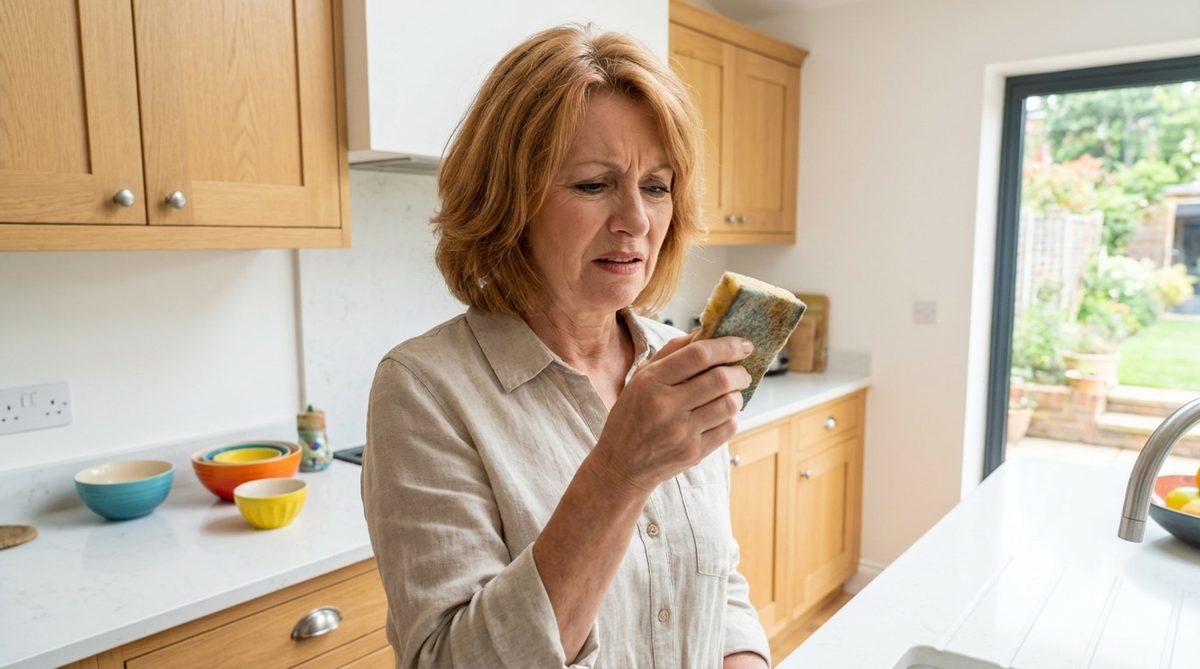
January usually signals the start of a fresh cycle. We want order. We want the mess of the holidays gone. But look at the edge of your sink. That humble sponge has been working overtime. It handled the mountain of dishes after family dinners. It’s been squeezed, rinsed, and left to drip.
You think it’s cleaning your kitchen. It’s not.
That small, porous tool is likely the most contaminated object in your entire house. It beats the toilet bowl for bacterial concentration. Every time you wipe a counter with a damp, dirty sponge, you aren’t sanitizing the surface. You’re spreading a colony of microbes across it. If you don’t treat your sponge with absolute rigor, it becomes a breeding ground for infection.
Your sponge isn’t just an aid to cleanliness. It is a hazard if ignored.
Зміст
The Science of the Sponge: Why It’s a Bacterial Bomb
It is ironic. The tool meant to remove dirt is actually the primary vector for it. Think about the structure. A standard kitchen sponge has thousands of tiny pores. These cavities are designed to absorb liquid and trap debris. That makes them perfect for holding onto dirt. And dirt holds bacteria.
In the kitchen, the environment is ripe for growth. You have warmth. Especially in winter, when the heating is on. You have constant moisture from washing dishes. Heat plus humidity is a perfect ecosystem for rapid bacterial proliferation.
But it’s not just the air. It’s what’s trapped inside. Microscopic food residues stay embedded in the fibers after every wash. That food acts as a pantry for microorganisms. Without increased vigilance, using an old sponge spreads that bacteria everywhere. You think you’re disinfecting your table. You’re just seeding it.
How to Dry and Squeeze Your Sponge Correctly
Water is the enemy. Bacteria need moisture to survive and multiply. The moment you finish using a sponge, the clock starts ticking. If you leave it sitting in a wet dish rack or a pooled saucer, you’re inviting disaster.
Squeeze it out completely. Then, let it dry. Fully. A damp sponge is a ticking time bomb. You need to cut off the bacteria’s lifeline.
Here is how you do it without making a mess or losing your mind.
- Stop leaving it in the sink. Rinse it under hot water to remove visible food particles. Squeeze it until no more water comes out. Place it on a rack that allows airflow. Not in a closed container.
- Use heat to kill germs. If your sponge is microwave-safe (check the label, no metal!), wet it thoroughly and microwave it for one minute. This kills 99% of bacteria. If it’s not microwave-safe, soak it in boiling water for five minutes. Or put it in the dishwasher on a high-heat cycle.
- Replace it often. A sponge looks clean but hides millions of germs deep in its core. Replace your sponge every two to four weeks. If it starts to smell, toss it immediately. Don’t try to save it.
The Rotation Strategy: Two Sponges Is Better Than One
Why use one sponge for everything? You shouldn’t. Rotating sponges reduces cross-contamination. It also extends the life of each tool.
Try this simple system:
- Sponge A: Reserved strictly for plates and bowls. These items usually have less grease and food residue than pots.
- Sponge B: For pots, pans, and greasy surfaces.
3

Stop Stagnant Water Immediately
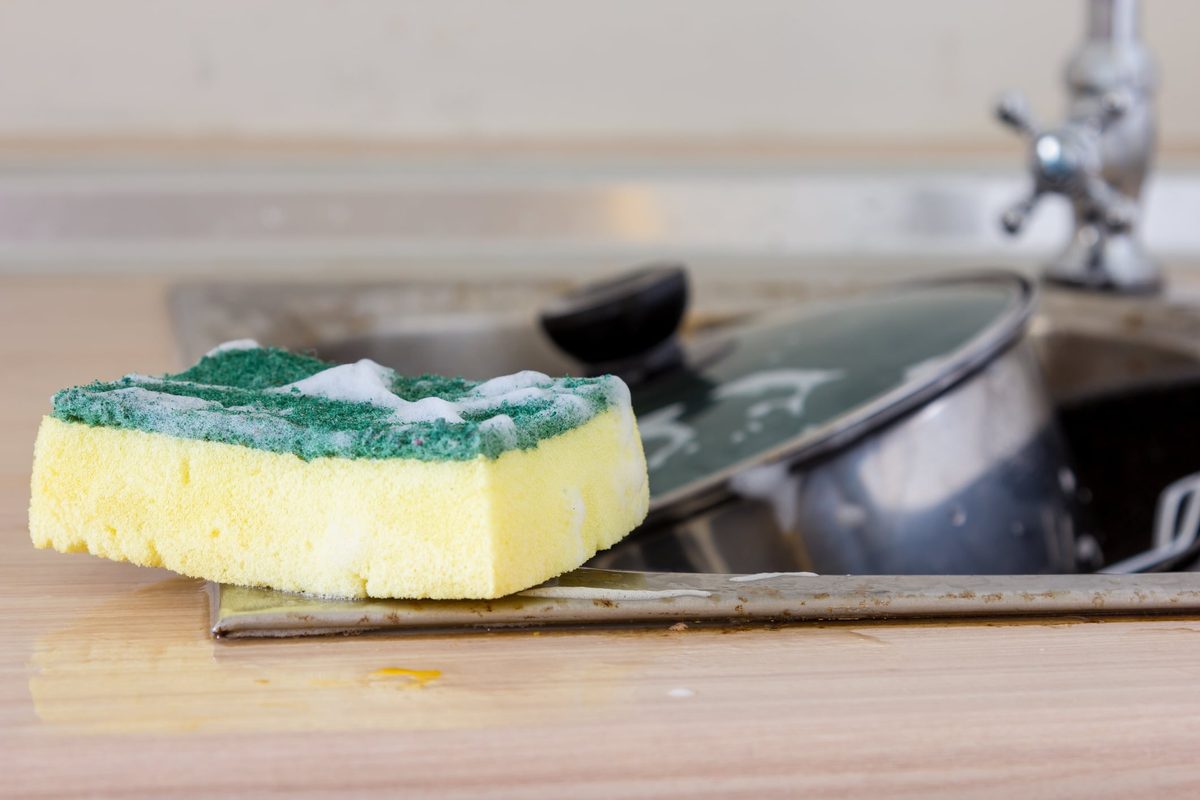
Bacteria need water to survive. If you leave your sponge wet, you are essentially feeding a bacterial colony. The first step to killing bacteria in your kitchen sponge is simple but often ignored: control the humidity.
After every use, rinse the sponge thoroughly with clear water. You need to flush out grease and crumbs. Then, wring it out aggressively. This shouldn’t be optional. If you want a healthy kitchen, this must be an absolute reflex.
Once the sponge is dry to the touch, never leave it sitting in a puddle at the bottom of your sink. Stagnant water is a death sentence for hygiene. Use a vented sponge holder or a small wire rack. Air needs to circulate freely around the object. This promotes rapid, complete drying between uses. Without airflow, you are just creating a petri dish.
Microwave or Boiling Water for Deep Disinfection
Even with perfect wringing, you still need deep cleaning. Pathogens build up over days. Experts recommend a strict disinfection routine every two days to keep bacterial load acceptable.
Heat is the most effective and accessible tool here. Intense heat destroys most common germs. You have two solid options.
- Boiling Water: Submerge the sponge in a pot of boiling water with added white vinegar.
- Microwave: This is the modern, rapid method. It works if your sponge contains no metallic particles. This thermal action sanitizes the fibers deeply without harsh chemical synthetics.
Here is the exact protocol for microwave disinfection:
- Soak the sponge completely in water. It must be wet. A dry sponge can catch fire.
- Place it in a microwave-safe bowl.
- Heat on maximum power for two minutes.
- Let it cool before squeezing. You will avoid serious burns.
This process kills a large portion of accumulated bacteria. But it is not a permanent solution. It buys you a few extra days of safety. Understand this: heat does not remove all embedded organic matter. Debris eventually forms a protective biofilm inside the synthetic or vegetable foam. As this builds up, thermal cleaning becomes less effective over time.
The 7-Day Rule for Replacement
Despite rinsing, drying, and disinfecting, there comes a time when the sponge must go. Home hygiene experts agree on a replacement frequency that most households ignore.
For optimal safety, replace your kitchen sponge every seven days. Ten days is the absolute maximum. After that, the sponge structure degrades. It starts to crumble. Bacterial accumulation becomes impossible to manage effectively, even with microwave treatments.
Do not wait for a bad smell or crumbling texture to trigger a change. By then, it is too late. Treat this frequent replacement as a necessary investment in your household’s health. It is as vital as buying fresh groceries.
To limit the ecological impact of this rapid rotation, choose natural, biodegradable, or compostable sponges. Alternatively, use machine-washable alternatives that withstand cycles at 60°C. These last longer and reduce waste.
Adopting this rigorous approach transforms a mundane object into a safe ally. It stops being an invisible enemy. Look at your current sponge. Is it still up to the task?


