
















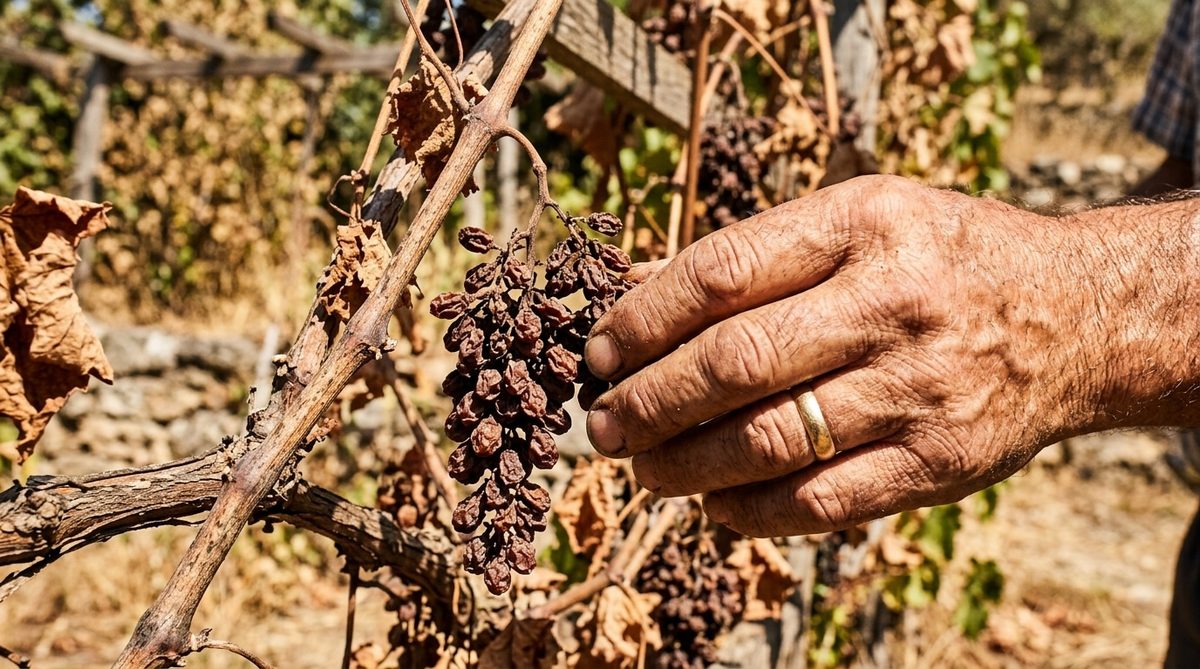
Your grapevine looks dead. The leaves are brown. The branches are drooping. It’s mid-July. The sun is beating down. Your instinct is to grab the hose. You want to save it.
Don’t.
Watering a wilted vine in extreme heat often kills it faster than the drought. It’s a cruel irony. But it’s true. Here is why your reflex to hydrate might be destroying your garden.
Зміст
The hidden mechanism of vine survival in summer heat
Plants don’t just sit there when it gets hot. They react. They shut down growth. They close their stomata to stop evaporation. They hoard every drop of moisture they can find.
But sometimes, the problem isn’t the air. It’s inside the wood.
This is called thrombosis. Microscopic fungi clog the vascular system. The xylem gets blocked. Water can’t move up to the leaves. The plant creates internal gum plugs to stop diseases like esca from spreading. It’s a defense mechanism.
The result? The leaves look thirsty. They wilt. But the roots might be fine. The pipes are just plugged. If you pour water on the soil, it won’t reach the leaves. It will just sit there.
Why sudden watering causes fatal shock to dormant roots
Imagine a blocked pipe. Now imagine flooding the basement.
If the vascular channels are closed, water stays in the soil. It stagnates. The roots drown. Asphyxia sets in. Fungal rot takes over. The balance between evaporation and water uptake collapses.
There is another factor. Temperature.
In the middle of a heatwave, the soil is hot. Garden water is cold. Pouring cold water on hot roots causes physiological stress. It’s a thermal shock. The plant goes into apoplexy. The entire vine dries out even faster. You didn’t save it. You stunned it.
Watering a blocked system doesn’t hydrate the plant. It suffocates the roots.
How to actually help a wilting vine without killing it
Stop the hose. Look closer.
Check the leaves. Do you see yellow or red mottling? These are called tigrures. They signal a fungal issue, not dehydration. If you see them, water won’t help.
So what do you do?
Mulch heavily.
Use organic mulch. Straw. Wood chips. Leaves. Pile it deep. This covers the soil. It blocks the burning sun. It keeps the root zone cooler. It reduces evaporation. It’s cheap. It works.
Wait for winter.
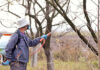
The real fix for wood diseases happens when the vine is dormant. Prune carefully. Cut away dead wood. Seal large wounds. Prevent entry points for fungi. This prevents the blockages that cause summer wilting.
Understanding how the plant works saves you from making things worse. Nature has its own rhythms. Fighting them with a hose is usually a mistake.
Quick summary
- Summer wilting is often a blockage, not a lack of water.
- Flooding the soil drowns the roots and causes thermal shock.
- Mulch protects the soil. Pruning in winter prevents the disease.
Leave the hose alone. Let the plant rest. Maybe it will survive.