

























It’s strange to think that a few people completely ignore microwave ovens. Over 90% of American households own one. they are fast. Save energy. Reheat leftovers in minutes. However, some people refuse to plug them in. They wanted a kitchen that wasn’t based on spinning glass plate.
There are reasons for this resistance. Some are fear based. Some are based on mythology. Some are just to make sure you have enough counter space. This is the real reason why modern microwave backlash.
Зміст
Counter space problem
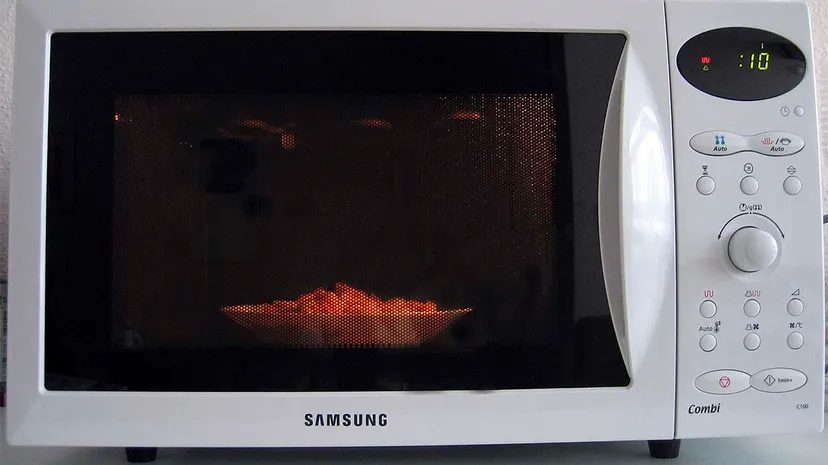
Modern microwave ovens are large. It is different from the first commercial model. Raytheon Radarange. It is 6 feet tall. It weighs more than 700 pounds. It cannot be stored in a regular cabinet.
The current model is smaller. But they still have valuable real estate. If your kitchen is already full, large appliances can disrupt the flow of your kitchen. It is against Feng Shui. Block access to other tools. For many homeowners, this trade-off isn’t worth it. You lose space for the devices you use once a day.
Misconceptions about radiation
When people hear the word “radiation,” they get nervous. This is natural. When a product becomes widely available, there is criticism. Popcorn made in the microwave. A frozen burrito. The convenience industry is booming.
However, “radiation” in itself is not a bad thing. It simply means waves of energy. The electromagnetic spectrum also includes radio waves. Also includes visible light. This includes x-rays.
Microwaves use a certain part of this spectrum. These waves are slightly shorter than radar waves. Shakes the food’s water molecules. They repeat this millions of times every second. Friction produces heat. Imagine rubbing your hands together quickly. The same applies here.
These waves are benign. Food does not become radioactive. It does not remain after opening the door.
Nutrient loss: myths and reality
The idea that microwaves destroy nutrients has been around for a long time. It goes on because it sounds plausible. In “American Hustle,” Jennifer Lawrence’s character calls it a “science oven.” She tries to cook with aluminum foil. The house nearly burns down.
However, the nutrient claim is wrong. Vitamins are lost when food is cooked for long periods at high temperatures. You boil the goodness out.
Microwave ovens are the opposite. Cook quickly. Minimal water consumption. Studies show that it preserves folic acid and antioxidants better than in a stovetop oven. This process is faster and gentler on cellular structures, allowing them to retain more nutrients.
Uneven Heating Patterns
A traditional oven heats the outside in, but a microwave oven heats everything at once. But they only target water molecules.
The moisture in the food is distributed unevenly. Proteins heat up more slowly. Fat heats up more slowly. The starch is heated slowly. Salt increases the cooking time.
This means you end up with a meal that is cold in the middle and has melted cheese around it. This is frustrating. The solution is simple. Please stir. Stop the timer. redistribute the heat. Neglecting this step has negative consequences. Blame the technique, not the tools.
Bacterial survival rate
Contaminated food should not be eaten. once. However, sometimes you may need to reheat two weeks’ worth of leftovers.
Microwaves struggle here. Uneven heating. Some parts get hot enough to kill bacteria. Other parts are still in the danger zone. This is a safety risk.
If you must reheat leftovers, make sure the internal temperature reaches 165°F. Use a food thermometer. Check several points. If your microwave doesn’t heat evenly, it won’t be able to kill all the harmful pathogens.
How magnetrons are changing cooking
The technology inside these boxes is interesting. It is based on a magnetron.
Percy Spencer discovered its cooking potential during World War II. He was doing radar research at the time. He noticed that the chocolate in his pocket had melted. Magnetrons emit radiation to heat sugar and fat.
Next, he tested the popcorn. It popped. He realized that he could harness this energy in cooking. Today, the same magnetron is used in millions of kitchens.
Why are some people afraid of it? Part of it is space. Part of it is habit. Part of it is uneven heating. However, the conventional wisdom about radiation and nutrients is not correct. This technique works. You just have to be a little careful.
Before you know it, you might find yourself standing in an kitchen without one. It is possible. But you might end up buying it. Or maybe not. The choice is yours. The leftovers will wait.