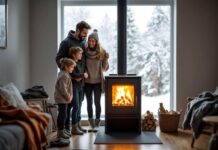
























Your electric furnace has gone silent. The house is getting colder, and you are left staring at a metal box that should be heating your home. Before you call a pro, there are checks you can run yourself. Electric furnaces are simpler than gas models. They do not have pilot lights, gas valves, or complex fuel lines. They rely on electricity and heating elements. This makes troubleshooting more straightforward.
Start with the basics. Often, the problem is not the furnace at all. It is the power supply.
Check the Power Sources First
You need to make sure the furnace is actually receiving energy. There are two common ways electric furnaces lose power. One is a tripped circuit breaker. The other is a switched-off safety switch.
The Circuit Breaker
Locate your main electrical panel. Look for the breaker labeled “Furnace” or “HVAC.” It may be a double-pole breaker. These are wider than standard breakers. If it is in the middle position or flipped to “Off,” flip it fully to “Off” and then back to “On.”
Wait for the furnace to try starting. Listen for the blower motor. If it spins up and air comes out of the vents, you have fixed the issue. If the breaker trips again immediately, do not reset it a second time. You have a short circuit. Call an electrician.
The Disconnect Switch
Look outside near the furnace unit, or in the basement/closet where it is installed. There should be a small metal box mounted on the wall or the unit itself. This is the disconnect switch. It looks like a light switch but is often larger.
Ensure the switch is in the “On” position. Some older models require you to lift a cover or remove a fuse. If the switch is off, turn it on. If there is a fuse inside and it is blown, replace it with the exact same amperage rating. Never use a higher-rated fuse. It will cause a fire.
Inspect the Air Filter
A clogged filter is the most common cause of furnace shutdowns. Electric furnaces do not have a heat exchanger that can crack from overheating in the same way gas furnaces do, but they still have limits. The heating elements can overheat if air cannot flow through them.
Pull out the filter. Hold it up to a light. If you cannot see light through it, it is too dirty. Replace it with a new one. Use the correct size. Do not force a filter that is too small or too large. Incorrect sizing creates gaps for air to bypass the filter, or it restricts airflow further.
With a clean filter, the blower motor can move air properly. This keeps the heating elements cool enough to operate safely.
Examine the Limit Switches and Thermostat
If power is good and the filter is clean, the furnace may still refuse to start. The next suspects are the limit switches and the thermostat.
The Limit Switch
The limit switch monitors the temperature inside the furnace. If the elements get too hot, the switch opens the circuit to cut power. This prevents the furnace from catching fire.
This switch is usually located near the heating elements. You can check it with a multimeter for continuity. If the mult