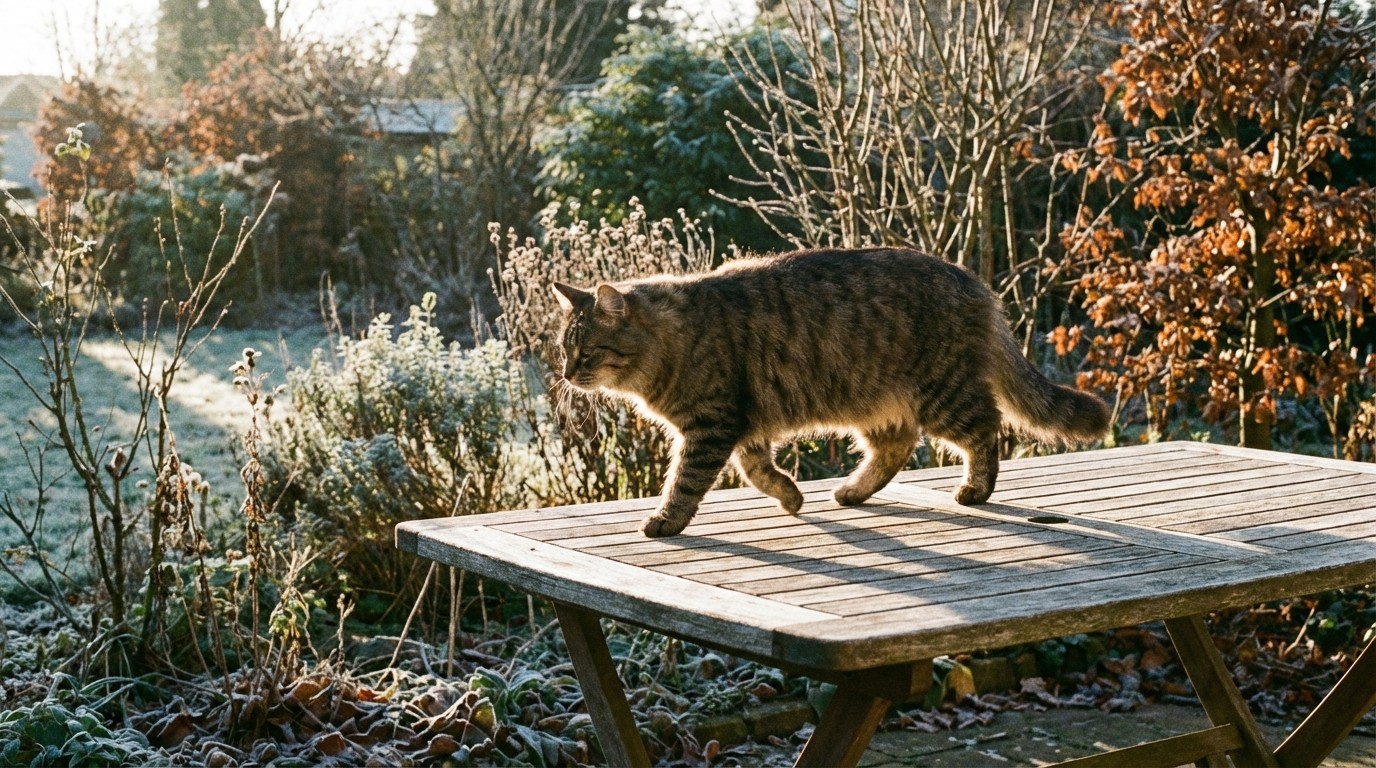
It is late January 2026. The songbirds—great tits, goldfinches, and robins—are desperate for food. They swarm the feeders in a frantic bid for survival against the winter chill. But they aren’t the only visitors.
Between the bare branches of the dormant shrubs, a shadow slips through. It is the silent, familiar figure of the neighbor’s cat.
For the gardener trying to protect biodiversity, this is a brutal reality check. One morning you find your flower beds overturned. The next, you see scattered feathers on the frost. The instinct to protect your local ecosystem clashes directly with the social obligation to be a good neighbor. Do you have to choose between the birds and the cat?
No. You don’t need drastic measures. You don’t need to hurt the animal. The answer lies in making your garden behaviorally uncomfortable for them, while remaining completely safe for the wildlife you want to keep.
Зміст
Why Your Garden Became Their Hunting Ground
To stop the problem, you have to understand why the cat chose your space. It wasn’t random. Your garden currently meets all three of their biological imperatives: food, cover, and a place to bury waste.
First, consider the soil. Cats are obsessively clean animals. They require specific substrates to dig and cover their excrement. In January, when the ground is frozen or compacted, a garden bed is an invitation. If you have recently aerated your soil, added fresh compost, or tended to a vegetable patch, you have inadvertently created a “luxury litter box.” The texture is perfect. It is soft, loose, and smells of earth. To a cat, this is prime real estate for their needs.
Second, the food source is obvious. Your winter bird feeders have turned your yard into an open-air pantry. The concentration of prey around these spots triggers the hunter’s instinct.
Third, the cover is abundant. Dense hedges, woodpiles left for hedgehogs, and thick undergrowth provide the perfect ambush points. A cat needs to stay hidden until the moment of the strike. Your garden offers more cover than most of the neighborhood.
When you combine fresh dirt for toileting, high-density prey, and thick concealment, you have built the perfect hunting dojo. The solution isn’t to scare them away with noise or water. It is to remove the environmental rewards that make your yard so appealing.
Making the Soil Unwalkable for Paws
A cat’s paws are incredibly sensitive. They rely on silence and stability to stalk prey. If the ground feels wrong, they will move on. The goal is to create a tactile barrier that is annoying but harmless.
Use Rough Mulch
Stop throwing away your garden waste after winter pruning. Sharp, rigid materials are excellent deterrents.
- Holly branches: The spiny leaves make it impossible for a cat to sit or walk comfortably.
- Rose trimmings: The thorns provide a physical warning.
- Raspberry canes: These woody stems are stiff and uncomfortable underfoot.
- Chestnut burrs or pinecones: These create an unstable surface. A cat cannot dig or pounce effectively on shifting, hard objects.
Lay these materials around the base of your plants. It disrupts the smooth, soft soil they crave for digging.
Install Invisible Chicken Wire
For larger areas or new spring plantings, this is the most effective long-term fix.
- Buy standard chicken wire (hardware cloth).
- Lay it flat directly on top of the soil where you want to protect plants.
- Lightly cover it with a thin layer of topsoil, compost, or leaf litter to hide it visually.
The wire stays in place. The plants can grow right through the mesh. But when a cat tries to dig or scratch, its claws get caught in the grid. It is frustrating, impossible, and instantly teaches the animal that this spot is not worth the effort. You can reuse the wire year after year. It protects the soil structure without blocking plant growth.
By removing the comfort of the soil and the ease of the hunt, you force the cat to look elsewhere. They are opportunistic. If your yard offers no reward, they will go next door. Or down the street. The territory shifts.
But there is another layer to this problem. The soil is only half the battle.
Using Scent as a Chemical Barrier
A cat’s sense of smell is not just good; it is overwhelming. What smells like a faint herbal note to you might register as a chemical assault to a feline. You can leverage this hypersensitivity to create invisible boundaries in your garden.
Certain plants act as living deterrents. Since January is too cold for planting in the ground, use this time to plan for Rue officinale (Ruta graveolens) and Coleus canina in the spring. These plants release a stench that cats find unbearable when they brush against them. Until then, you can simulate this effect. Apply essential oils sparingly to wooden stakes or garden borders. The goal is to saturate the air with molecules that signal to the cat: this space is uninhabitable.
For a zero-waste approach, your kitchen is a weapon. Winter brings citrus, and cats hate citrus.
Recycle orange, lemon, and grapefruit peels. Chop them into small pieces and scatter them in flower beds. As they dry, they release essential oils that repel felines. Coffee grounds work too. They are a great fertilizer for your plants, but their strong odor and sticky texture when wet bother cats. Mix in some ground black pepper for extra potency. Rain or snow will wash these away, so you must reapply them frequently to keep the scent barrier intact.
The Surprise Element: Motion-Activated Water
If smells fail, you need active deterrence. Most domestic cats despise water. Use this aversion to protect your garden when you are not home.
Modern technology provides a solution: motion-sensor sprinklers. These devices run on batteries or solar power. They monitor a specific zone. When movement is detected, they fire a short, precise jet of water at the intruder. The aim is to associate the garden with an immediate, unpleasant surprise.
Be careful in freezing temperatures. Drain these systems before ice forms to prevent damage. But in mild winters or during thaws, they are highly effective.
The psychology here matters more than the wet fur. Cats are territorial. They need to feel safe and in control to hunt or relieve themselves. A random spray of water shatters that sense of security. The garden becomes a high-risk zone. It is unpredictable. Stressful. A pragmatic cat will look elsewhere for a quiet spot to do its business, leaving your garden alone.
Fortifying Bird Feeding Stations
Protecting the whole yard is hard. Securing the specific spots where birds eat is non-negotiable, especially in winter. This is where predation risk peaks.
Trees with nests or hanging feeders must be inaccessible. Install cat spikes (stops-minous) on trunks. These are metal or plastic collars with upright spikes. Place them about 1.8 meters off the ground. They stop cats from climbing without harming the animal. Even skilled climbers get stuck. This simple device protects nests and allows birds to feed in high branches without fear from below.
The layout around feeders is equally important. You must clear the view around bird stations. Remove the element of surprise. Do not place a feeder within two meters of a dense bush where a cat could hide. Birds need a 360-degree view to spot danger and fly away.
If you use ground-level feeders, surround the base with thorny branches. Use rose cuttings or berberis bushes. This creates a physical barrier that stops cats from ambushing prey that falls to the ground.
The garden becomes a calculated risk for the cat. It is no longer a hunting ground. It is a place of confusion. And confusion leads them to leave.
One-shot fixes rarely stick. Cats are creatures of habit. They are stubborn. They learn. If you rely on a single deterrent, they will adapt. They will find a workaround. You need a long-term strategy built on consistency and variety.
The mistake many make is sticking to one method. Eventually, the cat gets used to it. Or worse, it figures out how to bypass it. The key is to keep the visitor guessing. Vary your methods to prevent habituation. If you use citrus scent this week, switch to coffee grounds mixed with black pepper next. Move the ultrasonic devices. Change the placement of the water spray. Shift the physical barriers on the ground.
This unpredictability creates a sense of unease. It stops the cat from settling into a comfortable routine on your property. The goal is not to scare them into submission. It is to make your garden feel like too much effort for too little reward.
Rewiring the Mental Map
Don’t expect instant results. Changing territorial behavior takes time. You are essentially retraining the animal’s perception of your space. The victory comes when the cat chooses another sidewalk. It doesn’t have to be fear-driven. It just has to realize that your yard is not worth the energy.
The cat redraws its mental map of the neighborhood. Your patch of land becomes a “low-interest” zone. This is a quiet victory. No violence. No harm. Just peace for you and safety for the birds. They can finally sing and feed without being watched. 🐦
The goal is not to drive the cat away with fear, but to make your garden uninteresting to it.
Why Consistency Matters
Cats are intelligent. They test boundaries. If you give up after a week of no results, you lose. The cat learns that persistence pays off. You must stay the course. Mix and match your deterrents. Rotate them every few days. Keep the environment slightly off-kilter.
This approach works because it targets the cat’s decision-making process. It’s not about pain. It’s about inconvenience. When the effort outweighs the benefit, the cat moves on. It’s a psychological shift. Your garden becomes a no-go zone by choice, not by force.
Practical Steps for the DIY Homeowner
You don’t need high-tech gadgets. You need creativity and patience. Start with simple, cheap options. Citrus peels. Coffee grounds. Pepper. These are effective because cats hate strong smells. But they wash away. They dissipate. You must replenish them.
For physical barriers, think outside the box. Chicken wire. Pine cones. Plastic carpet runners (spiky side up). These make the ground uncomfortable to walk on. Place them where the cat likes to lounge. Not where it runs. Cats avoid uncomfortable resting spots more than active paths.
Water sprayers work well, but only if they are unpredictable. A timer isn’t enough. The cat learns the schedule. Change it randomly. Or use a motion sensor with a variable delay. Make it impossible to predict.
The Long Game
This isn’t a quick fix. It’s a lifestyle change for both you and the cat. It requires you to be vigilant. To observe. To adapt. If one method stops working, switch to another. Don’t get attached to any single


