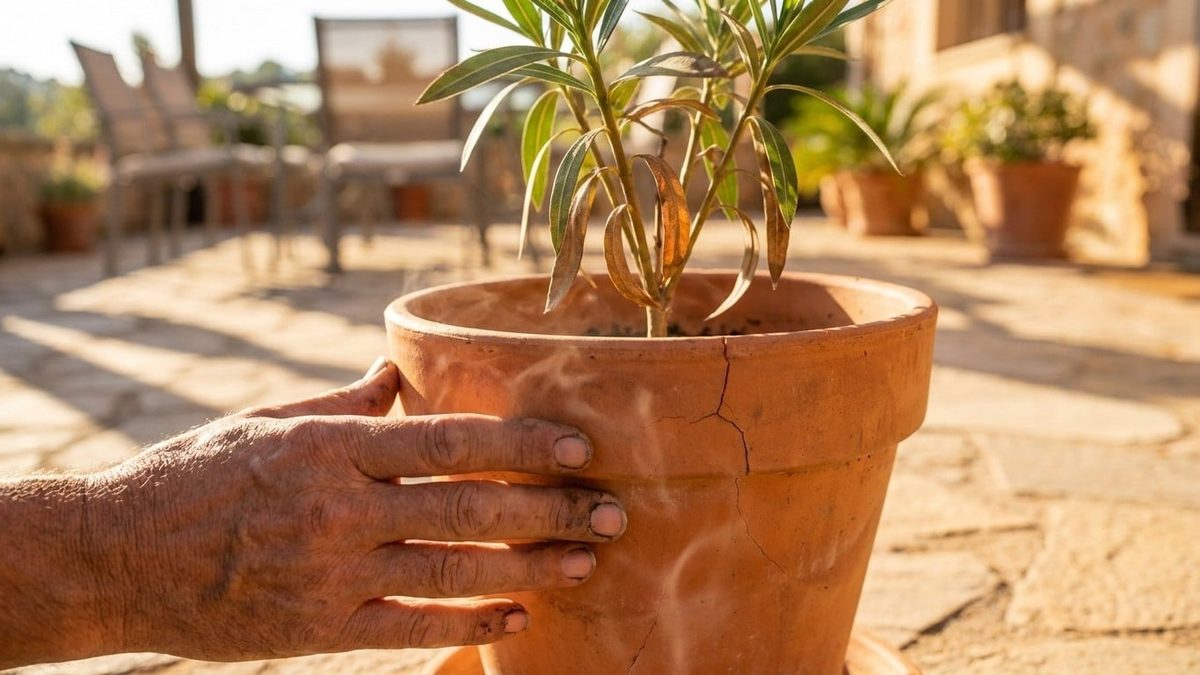
The back wall of a pot sitting in the afternoon sun is often the real culprit behind a dying oleander. It isn’t a disease. It isn’t bad luck. It’s a container heating up like a stovetop burner and roasting the roots from below. The foliage gives the illusion of a deep illness. But the plant is just cooking.
For years, the reflex was simple. Brown, curling leaves? Toss them in the green waste bin. Big mistake. Nerium oleander grows naturally on riverbanks where the roots stay cool. In a pot on a terrace, the soil volume is limited. The pot’s wall heats up under the sun. Result? A superheated pot cooks the peripheral roots. This worsens yellowing even if you water correctly. The oleander passes for sick when it is simply roasting at the base.
“A superheated pot can cook peripheral roots, worsening yellowing even if watering is correct.”
How to Diagnose Root Heat Stress vs. Disease
Two gestures are enough to set a reliable diagnosis. No special equipment needed. First, plunge a finger into the substrate. If the soil is still fresh, the problem is not water. Second, observe the damage distribution on the shrub. If only leaves facing direct radiation are affected, the sun is burning the leaf tissue.
This pattern fools most people. Leaves on the sunny side yellow then brown. The substrate remains moist. The rest of the shrub keeps green foliage. Localized yellowing tricks many gardeners into thinking they overwatered or underwatered.
Another less-known factor worsens this phenomenon. Water restrictions reinforce the situation for potted oleanders. Since 2024-2025, several departments have strengthened summer water bans. Prefectural orders prohibit watering during the day or limit authorized time slots. This leaves the substrate to dry completely between sessions. An oleander is a water-intensive plant during summer flowering. A south-facing pot without morning or evening watering accumulates stress. The sun grilles the foliage. Dryness dries out fine roots. The heated wall finishes the job on the surface.
The Right Move: Deep Watering, Moving, and Pruning
The good news? This trio of symptoms—brown tips, curling, seemingly dry stems—can almost always be treated without sacrificing the plant.
First reflex: heavy watering. Not a thin stream that runs off the surface. You must soak the root ball deeply. Wait until water exits the drainage holes. This rehydrates the roots, not just the top centimeters of peat.
Second gesture: move the pot. Often neglected. Shift the container even by a few tens of centimeters. Ensure it is shaded during the hottest hours. Even if the foliage stays in the sun. Optionally wrap the pot in a veil or light-colored cachepot. Reduce heating. A cardboard sheet, a larger insulated planter, or a wall’s shadow works in the afternoon. The goal isn’t to deprive the plant of light. It loves light. The goal is to isolate the container from the direct radiation turning it into a small oven.
Third step: pruning. With parsimony. No need to slash everything brown. Wait a few days after temperatures normalize to see what really recovers. Only snap stems that have become brittle. Dry to the wood. No sign of life? Use secateurs. The rest, even if dull, can restart once freshness returns to the substrate.
“Wait for vegetative recovery to distinguish dead wood from living wood.”
This caution aligns with a general principle for Mediterranean shrubs damaged by frost or heat. The reflex to immediately prune damaged parts is tempting. It’s better to wait for vegetative recovery. Distinguish dead wood from living wood.
Anticipate the Next Heatwave
Once the crisis passes, small adjustments prevent reliving the same scare next summer.
The choice of container matters more than you think. Terracotta pots favor good aeration of the substrate. But they require stricter watering surveillance. Evaporation is higher. Plastic tubs are easy to move. Lighter. They retain moisture better. On a south-facing balcony, this detail changes everything. A light-colored pot absorbs significantly less heat than black or dark terracotta.
Mulching also deserves its place in the summer routine. Add mulch in summer to conserve moisture. Protect roots from excessive heat. A simple layer of vegetative mulch on the surface. Just a few centimeters thick. Acts as a thermal shield. Limits evaporation between waterings.
For gardeners hesitating on pot size, know this: a minimal volume of 40 liters is recommended for young subjects. A pot too small heats up faster than a large tub. Simply because it offers less thermal inertia to the soil mass. The next time the thermometer climbs, a simple touch of your hand on the pot’s wall will tell you more than a diagnosis of the leaves.
Sources: toutvert.fr | laurier-rose.fr


