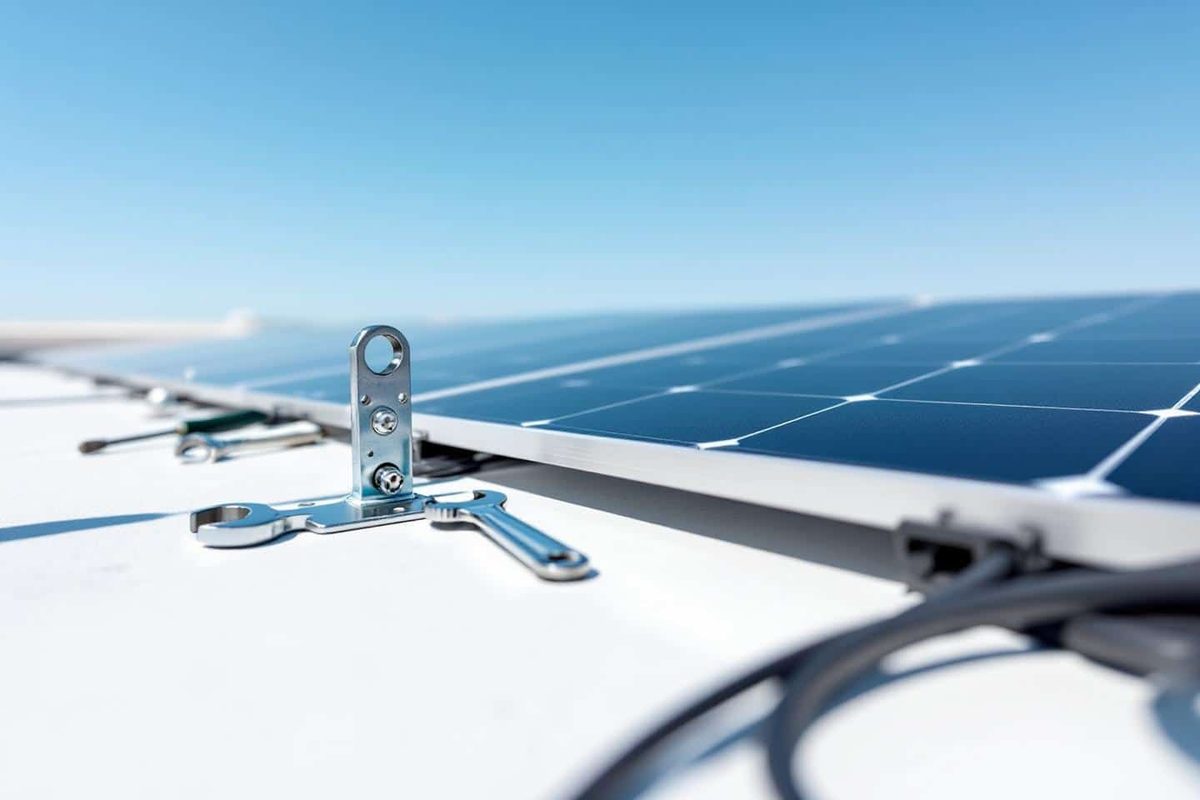
Installing solar panels at home feels like a dream. Most people imagine a crew of technicians in hard hats and harnesses scaling a steep slope. It looks dangerous. It looks expensive. It looks impossible for a weekend warrior.
But there is a secret among experienced DIYers. You can turn a flat roof into a solar power plant without calling in a specialist. It is not rocket science. It is just a different angle of approach. Making your home more energy independent and lowering your bill while helping the planet is possible. You just need the right method. The trick that simplifies everything is using install solar panels on flat roof techniques designed for stability and ease. No hidden traps. No head-scratching confusion.
Зміст
Why a Flat Roof Is an Unexpected Ally
Think about traditional solar installations. You picture a pitched roof. Tiles. Gutters. Gravity. The panels are locked into the slope’s natural angle. You have little room for maneuver.
A flat roof is different. It is a blank canvas. The surface is open. It is often unused, just sitting there gathering dust and rain. This empty space gives you freedom. You are not forced to follow the roof’s existing geometry.
On a slope, you have to calculate the pitch to within degrees. It is stressful. On a flat surface, you can choose the optimal orientation. Aim for true south if you are in the northern hemisphere. Adjust the tilt manually. You set the angle to match the sun’s path.
There is also a safety bonus. You are working on level ground, essentially. No vertigo. No risk of slipping off a ridge. The access is easier. The process becomes safer. This matters when you are handling heavy glass and aluminum.
Demystifying the Fear: The Magic Tool
The word “electricity” triggers anxiety for many homeowners. We fear shock. We fear code violations. We fear doing it wrong.
The real trick is not complex engineering. It is about the right accessory. Enter adjustable tilt mounts. These are the magic tools for smart DIYers. They transform a horizontal surface into a kilowatt-harvesting machine.
You can buy these at hardware stores or from specialized solar suppliers. They are modular. They do not require invasive drilling into your roof membrane. You place them. You lock them in. You slide the panels on.
Say goodbye to hours of guessing. Say hello to an installation that feels as simple as a quiet Sunday morning.
The Art of Placement: Maximizing Output
The Smart Choice of Tilt Mounts
Novices make a common mistake. They lay panels flat. They think it saves time. They think it looks cleaner.
It kills efficiency.
Without an incline, dust collects. Rain does not wash it off. The production drops, especially in winter when the sun is low. Adjustable mounts are the savvy bricoleur’s ace in the hole.
Choose an angle between 20 and 35 degrees. The exact number depends on your latitude. This maximizes exposure to the sun’s rays. These structures are modular. They snap together. They fit standard panel sizes.
Installation is straightforward. Even a perfectionist with a spirit level can get it right.
Orientation and Fixation: Catching Every Ray
Here is the essential part. A good solar panel must look at the sun as long as possible.
Aim for true south. Use a compass. Ignore magnetic north. Get it right.
The angle? Around 30 degrees works well in France to balance summer and winter yield. Adjust for your specific location.
Fixing the supports is the next step. Use weighted systems and adapted rails. Often, you do not need to drill directly into the roof. This prevents leaks. It protects your waterproofing.
Use concrete blocks or ballast stones. Place them on a protective membrane. Distribute the weight evenly. This keeps the structure stable without compromising the roof’s integrity.
One final tip for efficiency. Keep panels away from edges and equipment. Chimneys. Vents. Gutters. Anything that casts a shadow will reduce output. The panels need clear, uninterrupted sunlight throughout the day.
Mistakes to Avoid for a Durable Setup
Any experienced DIYer knows not to skip safety and durability. For a reliable project, resist the urge to overload the roof. Do not improvise fixings with cheap materials.
Invest in certified supports. Check your roof’s load capacity. Most modern flat roofs can handle the weight easily. But check with your building manager or a structural professional. Better safe than sorry.
Another often-neglected risk is electrical wiring. Protect cables from moisture. A poorly installed wire can cause a shutdown during the first storm. Use proper conduits. Seal connections.
Finally, check local regulations. Usually, a declaration to the city hall is enough. But every municipality has its own rules. Do not skip the paperwork. It causes headaches later.
The Bottom Line
You do not need to be an electrician to start. You just need patience and the right hardware. The flat roof is not a limitation. It is an opportunity for control. You set the angle. You set the direction. You set the pace.
The transition to green energy starts with a single panel. Then another. Then the whole roof. It is within reach.
Monitor solar output with smart tools
Installation is just the start. Monitoring is where the real value lives. Modern monitoring systems turn abstract energy production into tangible data. You do not need to be an engineer to understand what your panels are doing. A quick glance at the app gives you the daily report. You see exactly how much electricity each panel generated. This visibility is not just for vanity metrics. It is diagnostic.
If production drops suddenly, the app tells you. Was there a cloud cover? Did a branch fall on a panel? Is there dirt blocking the light? You can spot issues before they become costly repairs. Regular maintenance keeps efficiency high. Clean the panels once or twice a year. Debris, pollen, and bird droppings reduce output significantly. It takes thirty minutes with a hose and a soft brush. Do not use abrasive cleaners. Water and gentle scrubbing are enough.
Strategic placement matters too. Keep young trees at a distance. Shade is the enemy of solar efficiency. Check cable connections regularly. Loose wires cause resistance and heat. These small checks extend the lifespan of your equipment. They maximize your return on investment. Ignoring them shortens the life of the system.
See energy independence in action
This is the payoff. You are generating power. Your grid consumption drops. The monthly bill shrinks. It feels good. In France, a well-installed system on a flat roof covers 30% to 60% of a household’s needs. This range depends on your region’s sunlight and your personal consumption habits. The savings are real. The environmental impact is personal. You are reducing your carbon footprint directly.
Flat roofs offer a unique advantage. They are modular. You can expand the system later. Add more panels as your needs grow. Maybe you buy an electric vehicle. Maybe you add insulation. The system adapts. Auto-consumption becomes a living project. It is not static. You control the scale. You control the budget. This flexibility transforms a one-time expense into a long-term energy strategy.
The barrier to entry is lower than you think. You do not need perfection. You need action. A flat roof is a canvas for energy autonomy. With the right tools and a bit of grit, solar power is accessible. It is not magic. It is physics and maintenance. The question is not if you can do it. The question is when you will start. The sun is already shining.


