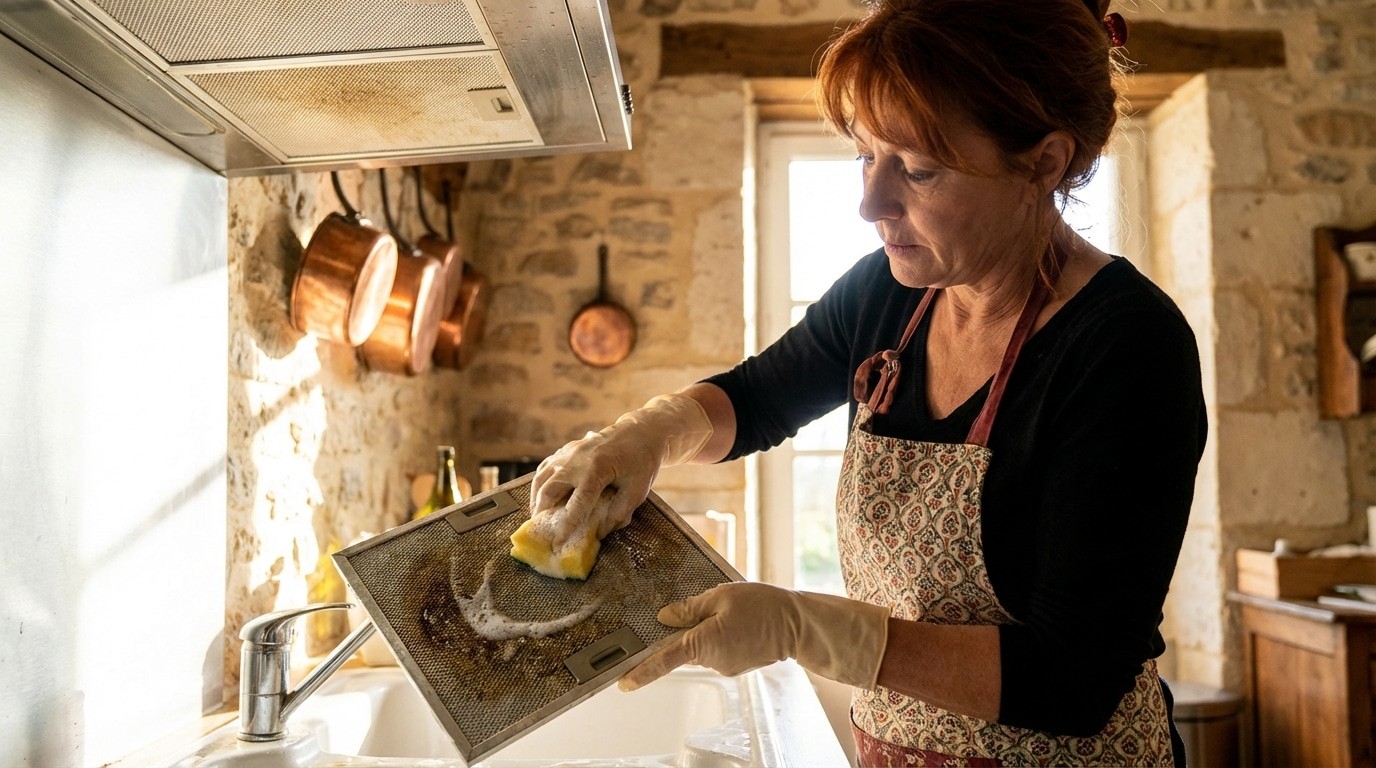
Holidays leave a mess. In particular, oil stains remain on the filter of the cooker hood. In the past few weeks, you’ve been cooking, partying, and probably making way too many cookies. Now these metal filters look like yellowed sponges. You take the brush. You rub. Nothing happened. The fat is boiled. It’s sticky. It is stubborn.
Stop. Put down the abrasive sponge. You are going to damage the mesh. Worst of all, it only forces the dirt deeper into the small crevices of the filter structure. Mechanical friction does not work here. The oil has oxidized. It solidified during the winter. Even if you scrub surface dirt, deep-seated dirt cannot be removed. This is a losing battle.
“The solution is not in the intensity of the exercise, but in breaking the chemical bonds of the frozen fat.”
Change tactics. Use immersion. Let chemistry do the heavy lifting.
Зміст
Why soaking is better than scrubbing
Range hoods are designed to collect particles. That complicated wire mesh is a grease trap and a trouble trap. If you try to scrub, you can tearing the delicate wires. You will also miss areas where grease can collect on the inside the weave.
Soaking is a game changer. This allows the cleaning solution to surround every fiber. It can reach surfaces your sponge cannot. Time and heat are used to dissolve lipid bonds. The result is hygiene without exhaustion. Maintains filter integrity. It can maintain clean air for a long time.
30-minute miracle bath
You need three things. water. baking soda. Dishwashing detergent.
What you need:
- A large basin or your clean sink
- boiling water
- Baking soda (about half a cup)
- Dish soap (a generous squirt)
*Rubber gloves
Process:
- **Remove the filter. ** Remove from hood. Handle with care. It’s easy to break.
- **Prepare the bathtub. ** Fill the basin with boiling water. be careful. Steam burns are no joke.
- **Mix the solution. ** Add baking soda to boiling water. Next, add the dishwashing liquid. Mix gently. Baking soda breaks down fats and oils. Dishwashing liquid can remove oil stains. Boiling water speeds up the reaction.
- **Soak. ** Immerse the filter completely. Let them sit.
- **Wait. ** Give it thirty minutes. Do not touch them. Let the heat go at its own pace. Watch the grease loosen. You will see it happen. The yellow film starts to come off.
- ** Rinse. ** Remove the filter. Rinse with lukewarm water. The fat should slide off. If stains remain, use a soft cloth. No scrubbing required. Wipe it off.
- **Dry. ** Allow to dry completely. Or pat dry with a towel.
- **Reinstall. ** Put the clean filters back. Your hood will smell fresher. Works more quietly.
This method is very cheap. This works. Save your wrists. And it works every time.
Why this is important for your home
A clean hood is not only aesthetically pleasing. It’s practical. When the filter becomes clogged, the air flow is reduced. Using a stove makes cooking difficult. Smoke lingers. Grease can spread to the cabinet. Over time, this buildup is a fire hazard.
By using this immersion method, you can maintain the efficiency of your device. Extend its life. You don’t need to buy expensive chemical cleaners that can remove paint or damage metal. Baking soda has mild properties. Dishwashing liquid is common. Both are safe for most metal filters.
Check the manufacturer’s instructions. Some coated filters may have certain limitations. However, this method is safe for ordinary stainless steel or aluminum mesh.
When to do this
Do this after the holidays. Or whenever you notice the color yellow. Or when your kitchen smells like stale cooking oil. Make it a monthly habit during heavy cooking seasons. Winter is the peak season for oil. It might be lighter in summer. Please adjust accordingly.
Filters are the unsung heroes of the kitchen. They catch the mess so you don’t have to. Treat them right. Use the soak. Skip the scrubbing. Save your energy for the next meal.
The grease is gone. The hood looks like new. The air is clear. What are you cooking next?
3-ingredient soak to dissolve grease build-up
Do not buy expensive industrial degreasers. The solution is already in your pantry. Three special agents work together to attack oil and grease from different angles. You will need plenty of boiling water, plenty of grease-cutting dish soap and about 100 grams (1 cup) of baking soda.
First remove the metal filter from the cooker hood. It’s usually very simple. If the sink is small, seal it or use a larger sink. In larger models, grab your oven’s roasting pan. Lay the filter flat. Sprinkle plenty of baking soda on top. Pour dishwashing liquid over it. Finally, soak everything in boiling water.
You are creating a thermal shock and mild chemical reactions. The heat melts the hardened fat. Soap breaks it down. Baking soda is mildly abrasive and alkaline and can remove stubborn deposits from metal. Leave it on for about 30 minutes. Wait until the water cools and turns dark brown. This color indicates that the grime is leaving the metal.
Rinse and dry to prevent rust.
After 30 minutes, the hard work was done. Pull out the filter. The fat has become gel-like and slippery. There is no need to rub vigorously. Carefully remove the remaining dirt with a soft dish brush or non-abrasive sponge. This is the final touch.
Rinse thoroughly with clean water. Wash off all soap and dirt residues. Next comes the most overlooked step: drying. Use a clean cloth or let it air dry completely. Residual moisture can cause rust, especially on certain types of metals.
Can I skip the soaking? Alternatives for the dishwasher
Want to save even more time? You can use your dishwasher. Place the filters one by one in the rack. Don’t mix them with plates. You don’t want the oil to get back on your dishes. Run an intensive, high-heat cycle.
There is a catch. The detergent in the dishwasher is harsh. The aluminum filter may become discolored or darkened. If you are concerned about a shiny, clear appearance, manual bathing methods are safer and more environmentally friendly.
In any case, reinstalling a clean filter can restore the range hood’s efficiency for several months.
“This invisible maintenance extends the life of your home appliances and improves your daily comfort.”
The hood breathes again. The kitchen is now clean. Why don’t you move on to a deep cleaning of your oven? This is the logical next step towards a complete spring refresh.